Parsha Terumah
Terumah- is an ‘offering’ and this weeks Parsha talks about HOW that offering/gift/ present/ is given. Hashem speaks to Moshe and says; “Speak to the Children of Israel and let them TAKE for me a portion, bringing a contribution for ME, each person according to the generosity of his heart, will he bring something”. Other interpretations and translations state; “Take for me a portion, from every man whose heart motivates him…“
The Chatam Sofer says that ‘giving’ with ‘Ratzon’ (desire, will) is the only part of us that we can truly give – and the value of the Mitzvah is in the ‘Ratzon’ – the desire to give from a deep place, from our hearts. This week’s portion is about giving contributions to the Tabernacle (Mishkan). The gold, silver, material things, are not things that actually belong to us. The whole physical world belongs to Hashem, and we must try and be satisfied with what we have. Hashem is asking more from us than just ‘giving’.
“They shall TAKE for me a donation” means that we need to take, and donate ourselves to Hashem. ‘Veyikchu li terumah’- take from the deepest part of ourselves, our ratzon, from our hearts, and put it into every mitzvah that we do. Only then, can we fulfill the true mitzvah with purpose of TZVATA- connection with Hashem.
(I love the word -TZAVTA (bonding) is a word so close and connected to SAFTA!?)
Remember that the people of Israel had been slaves in Egypt for so long, and they didn’t have many possessions when they lived in Egypt. Before they left, they took many things from the Egyptians and suddenly acquired riches, materials, gold and silver … and became rich. After centuries of slavery in Egypt, its only natural to expect that the newly freed slaves didn’t want to part with their newly acquired goods and possessions. That is why the Torah records that the contributions for the Mishkan were to be taken from every person whose heart prompted him/her to donate to the holy projects.
Betzalel, the builder of the Mishkan, possessed divine inspiration and was able to discern which gold was given with purest, selfless motives…
(See orange block for more about the Betzalel)
About the Mishkan
This Parsha talks in detail about the preparation and construction for the Tabernacle (the Mishkan). The Mishkan is the dwelling place or resting place for G-d’s Presence. It was intended to be the central rallying point of the nation, with the tribes surrounding it and G-d’s presence in a cloud above it. The ultimate purpose of the Mishkan was to create a physical space that would sustain the spiritual bond between Hashem and the Jewish nation.
The Mishkan structure was about 20 meters long. It was divided into 2 rooms: the larger room, the ‘Holy Chamber’ had the Menorah, the Table, and the golden Alter in it. The smaller room, known as the ‘Holy of Holies’ contained the Tablets of the 10 Commandments. The Kohanim, (Priests) did their daily work in the larger room, and only the Kohen HaGadol (High Priest) was allowed to go into the small room once a year on Yom Kippur.
There were explicit instructions on how to build a seven branched Menorah: it was to be made out of a single block of pure gold with decorative cups, knobs and flowers.
Facts about Betzalel
Betzalel, the Builder of the Mishkan, possessed Divine Inspiration and was therefore able to discern which gold was given with the purest and most selfless of motives.
The ‘pure gold’ was used for the construction of the Holy Ark which had the tablets of stone from Sinai
Facts about the Menorah
The Menorah was a seven branch candelabrum that was lit daily by the Kohanim. It was located on the Southern side of the Mishkan.
It’s light symbolized human enlightenment and understanding. The Talmud relates that one who wanted to become wise, would look at the Menorah (Bava Batra 25b).
This also relates to the custom of lighting the Shabbat Candles with olive oil and gazing at the Shabbat lights after lighting them, and during the making of Kiddush (Menuchot 85b
Levels of Giving:
Maimonides 1000 years ago wrote the guidelines for GIVING.
He clarified eight degrees of Charity – each one higher than the other:
Level 1- The giver enables the recipient to be self supporting.
Level2- Neither the giver, nor the receiver are aware of each other’s identity.
Level3- The giver knows the recipient, however the receiver doesn’t know the giver.
Level 4- The receiver knows the giver, but the giver doesn’t know the receiver.
Level 5- The giver gives directly to the receiver willingly.
Level 6- The giver only gives to the recipient, after being told to give/ (forced?)
Level 7- The giver gives less than he/she should give, but gives it cheerfully.
Level 8- The giver gives begrudgingly.
Fun Activities- Arts and Crafts
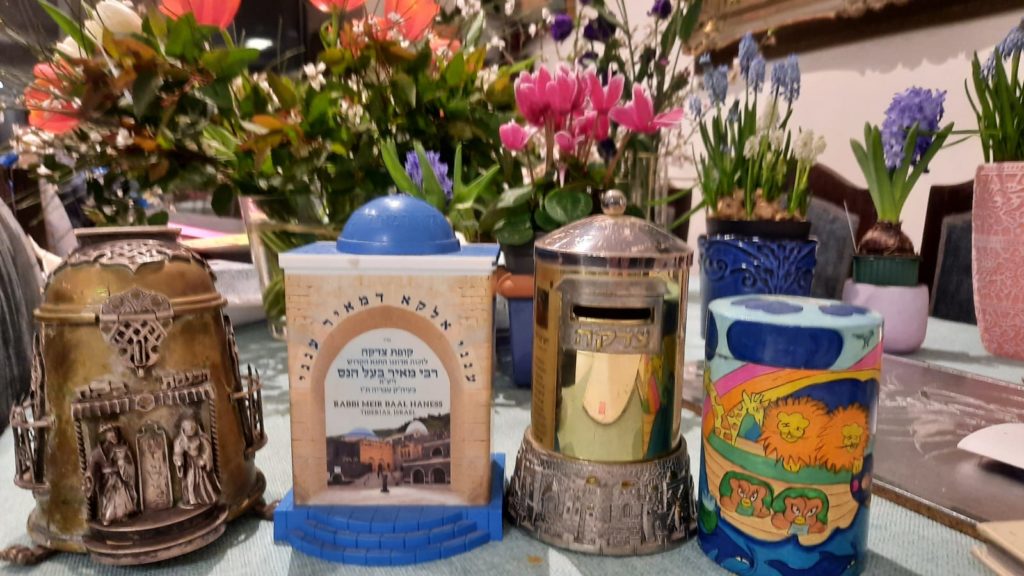
Make a Tzeddakah Box:(Remembering that Giving is a mitzvah)
Decorate a box, or buy a wooden box, and paint it/ put stickers and create a great Tzeddakah box for yourself or the family (or it could be a savings box- and you donate ‘ma’aseh -a contribution to the main charity box.
Braiding 3 colors of wool mentioned in the Parsha:
‘Turquoise, purple, and scarlet wool’- practice braiding with 2/3 strands, 4 stands and more. Finder knitting, making a scarf with these special colors.
Construction of the ‘Mishkan’:
Make two rooms – with boxes, and cardboard / wood, bits and pieces around the house. Find or make drawings, puzzles and pictures of the Mishkan. There are amazing picture books which depict the details of the Mishkan – It’s so interesting!
FUN FOODS:
Making hearts:
Giving from our hearts- You could make chocolate hearts with heart moulds, heart-shaped cookies, iced muffins and heart cakes.
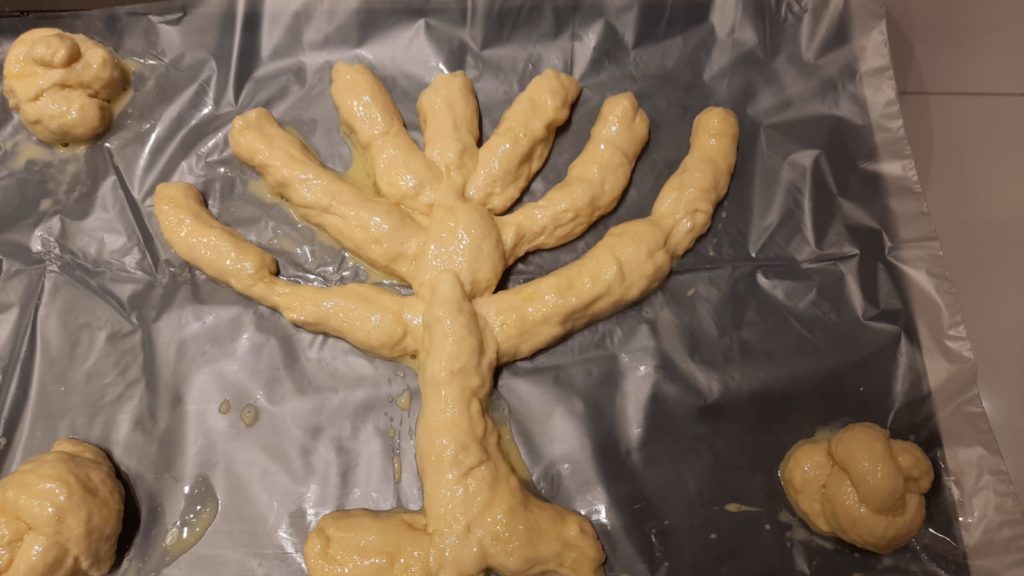
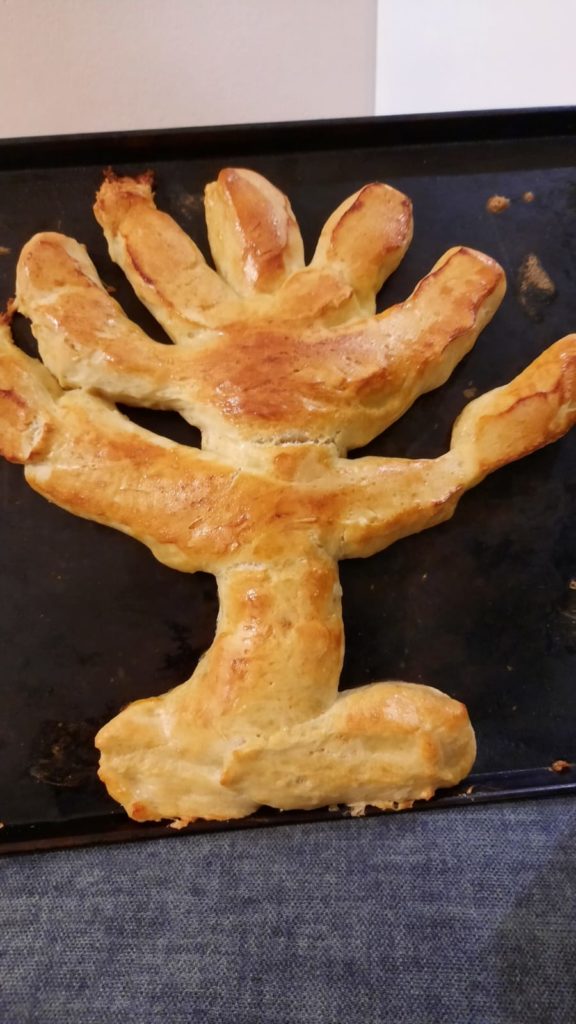
Making a Menorah:
This week try and make a Menorah Challah.
You could also make a vegetable Menorah- use carrot sticks, cucumbers, red and orange peppers, with a Hummos base
or a Fruit Menorah for Dessert!

Be creative and inventive, think about Giving, Terumah, from the Heart
Wishing you a heartfelt Shabbat,
Safta Laya
Loved it!