Parsha Acharei Mot and Kiddushim
This week is another double Parsha-and they connect to each other very well. Acharei Mot literally means ‘After Death’ and speaks about what happened to Aaron after the death of his two sons Nadav and Avihu. The Torah goes on to tell us about the Yom Kippur service. It tells in detail about the Kohen Gadol or his successors being the only ones allowed into the Holy of Holies (Kaddosh Kedushim) in the Holy Temple. There are many details after that about the sacrifices,and what happens. However the question is, WHY does Acharei Mot start with this flashback of the death of Nadav and Avihu and what does that have to do with Yom Kippur?
This is actually the big lesson of Yom Kippur- only ‘After Death’ can we understand and grasp the Purpose of Life. The experience of Yom Kippur is not an end in itself, rather a vehicle through which the Jewish people are able improve and sanctify themselves. The ultimate goal of the day is to bring about CHANGE.
When we are no longer able to change a situation, we are challenged to change ourselves.…
– Viktor Frankl (famous psychotherapist and holocaust survivor)
On Yom Kippur it is read ‘For on this day, atonement shall be made for you to cleanse you of your sins, you shall be clean before the Lord'(Lev; 16:30). On the holiest day of the year, the holiest person in Israel entered the Holy of Holies and performed the ceremony that restores the relationship between the people of Israel and Hashem. This Parsha gives us a strong practical clues as to how to LIVE after doing Teshuva (Repentence).
Rabbi Lord Jonathan Sacks (2020- ‘Judaism’s Life Changing Ideas’) expands the meaning of Teshuva in context of the rebirth of the State of Israel. He explains the words ‘repentence’ and ‘homecoming’. Not only -that ‘I sinned and I atone’, but ‘I was distant and I seek to return’. Physical and Spiritual homecoming are related’ . Hence a new sense and meaning of the word ‘Teshuva’ and Baal Teshuva’ . He speaks about a life changing idea and states ‘Sometimes we find our life is on the wrong track, not because of a specific sin but because we have an overall sense of being lost. Teshuva means coming home to G-d.’
On Yom Kippur when the High Priest (Kohen Gadol) enters the Holy of Holies, and wears specific garments. It explains that he should wear 4 white linen garments (tunic, sash, pants and head turban) like an ordinary priest wears in the Temple. Rashi explains that the Kohen Gadol doesn’t wear his 4 outer garments when he enters the Holy of Holies because they are made of gold which alludes to the sin of the golden calf. Maimonides explained that the High Priest wears his own special white garments to perform the services unique to Yom Kippur because being white, they are appropriate for our holiest day of the year. On Yom Kippur, the High Priest is involved in the services of Yom Kippur, he is acting as our defense attorney before G‑d and so must dress appropriately in the purest of colors, -White . In fact, Rashi explained that it is inappropriate for the High Priest to wear garments of gold because the gold itself cannot be both the prosecuting attorney and the defense attorney. So it is our custom, (minhag) to where white on Yom Kippur and think of purity, cleansing, starting over, and changing – wearing it on the outside with our clothes as well as inside ourselves.
We are also given the ‘How‘ to live, with details about Jewish laws- the Mishpatim (laws) and Chukim (decrees). Shira Smiles (2013- Torah Tapestries- Vayikra) explains 2 concepts mentioned in the Parsha ; ‘Lalachet Bahem’ –to follow them, literally, to walk in them and ‘Vachai Bahem’– Live by them, NOT die by them- and how important it is to preserve life. Targum Onkelos translates ‘vachai bahem’ as ‘live forever’, implying that performing mitzvah’s (good deeds) will give you ‘eternal life. Our Sages teach us that perfoming Mitzvah’s are what makes our lives valuable, and implies that a human being fulfills his purpose in life by doing Mitzvah’s and living a Torah Centered Life.
This moves on to the Parsha of Keddoshim- which tells us more details of how to LIVE our lives and relationships. Parashat Kedoshim sits right in the middle of the Book of Vayikra. It is the kind of the essence of what the Book of Leviticus is all about “Kedoshim tiyu ki Kadosh ani adonai Elohechem” -You should be holy because I’m holy. It tells us that we need to be holy and how to be holy. Kedoshim contains the two great love commands of the Torah.
The first is: “Love your neighbour as yourself. I am the Lord” (Lev. 19:18). Ve’ahavta Lere’acha Kamocha Rabbi Akiva called this “the great principle of the Torah.”
The second is: “The stranger living among you must be treated as your native-born. Love him as yourself, for you were strangers in Egypt. I am the Lord your God” (Lev. 19:34). Love is a huge subject and very fascinating. We need to understand that Judaism speaks about LOVE all the time and is one of the first civilizations to put LOVE at the heart of morality. Hillel explains that “What is hateful to you, do not do to your neighbor. That is the whole Torah. The rest is commentary; go and learn.”(Shabbat 31a.)
These are rules of reciprocity. Every human being is made in the likeness of G-d, and He made each of us in love. Therefore every human being, – ourselves, our neighbors, and the stranger should be seen as ‘in the image of G-d’ and that is why we have to love our neighbor, our friends and even the stranger. This is the ethic of holiness.(Rav Lord J Sacks)
The theme color this week is WHITE ( like the clothing of the Kohain Gadol when he goes into The Holy of Holies). In Western Cultures, the color White is often associated with weddings, hospitals, angels, and is often used to give a sense of purity, peacefulness, and cleanliness. In many Eastern cultures white is used as a symbol color of mourning and death. There are many interesting articles about the color WHITE and the psychological characteristics of this ‘non color’:
- White represents purity or innocence ( hence a bride’s white dress on her wedding day)
- Home Designers often use white to make rooms seem larger and more spacious. White conveys a sense of cleanliness, freshness and simplicity, often symbolizing a new beginning or fresh start.
- There are also negative aspects of ‘white’- it can seem cold, and stark too.
- White is considered a powerful color in feng shui, a system of arranging your environment to create harmony.
- The color of snow, white is often used to represent coolness and simplicity.
- Black is the absence of light. … Some consider white to be a color, because white light comprises all hues on the visible light spectrum. However, technically speaking, black and white are not colors, they’re shades.
White is also the Color Associated With The Divine, and the spiritual meaning of white is Light. It represents wholeness and completion.
FUN ACTIVITIES
LOVE; AHAVA in Hebrew
There is a statue in the Israeli Museum which is famous. It is by Robert Indiana and he made statues around the world, in different languages; English, French, etc. Try and make your own plaque, drawing of Ahava – in Hebrew or English. Note the 4 letters. Draw it, Color it, be creative, cut it out., mount it on cardboard or wood. Think about the word LOVE and what it means to you. Visit the Israeli Museum and find the Statue.

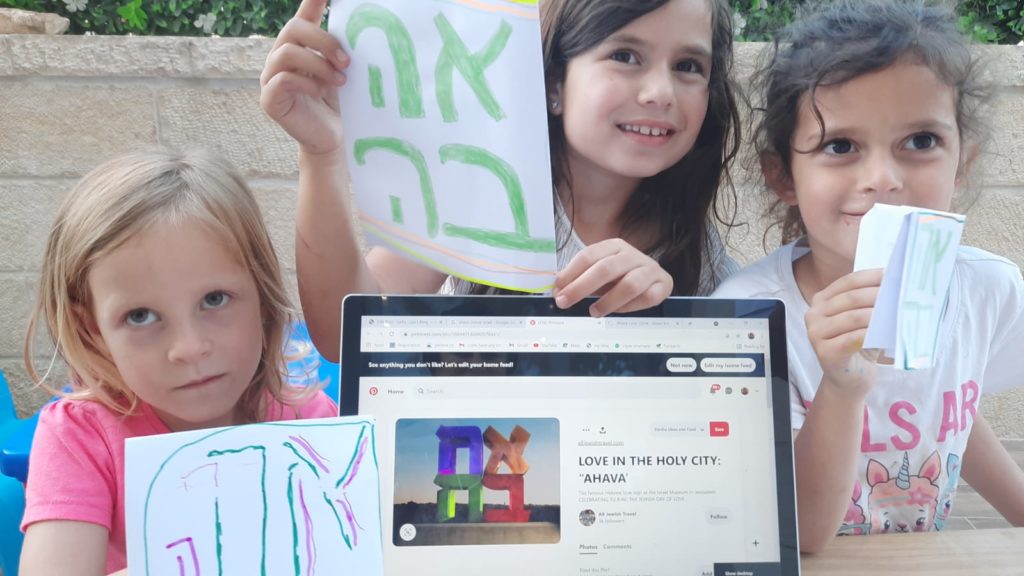
FUN ACTIVITIES
Our theme color this week is WHITE. Think of foods that are white?
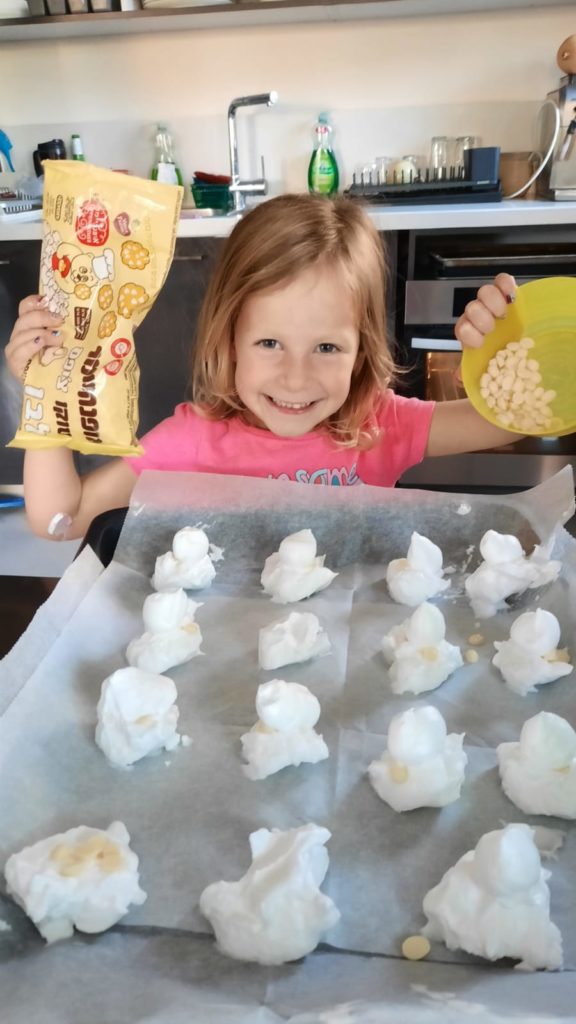
Meringues or Pavlova are made with white ingredients, which remind us of Yom Kippur, and the clothing of the Kohain Gadol when he went into the Holy of Holies. Make easy meringue kisses with white chocolate chips – thinking about our souls being pure on our holiest day- and they are delicious too. (Recipes below) What are white vegetables?
A great salad is Palm of Hearts and Mushroom salad
Quick and easy and a ‘White Salad’. Slice white mushrooms, open a can of Palm of hearts, slice them. Toss with lemon juice and salt and pepper seasoning. A different easy delish salad. ( promotes discussion about the White…and the Parsha)
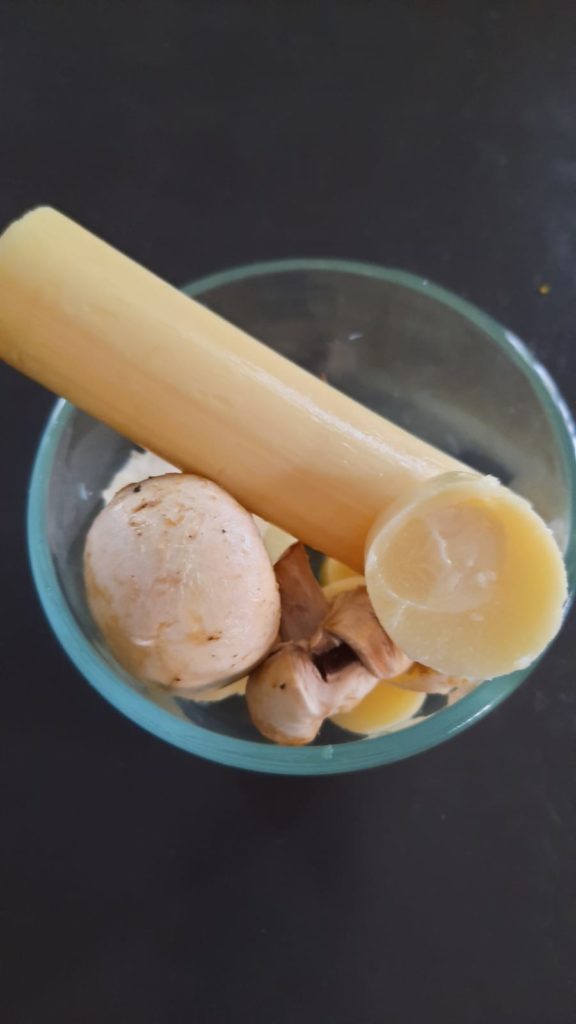
Meringues:
3 egg whites, 6 Table spoons of white sugar. 1 teaspoon of vanilla essence ( or vinegar if you like chewy meringues), White chocolate chips ( optional). Pre-heat oven to 180 degrees C ( 350 F)
Beat egg whites until stiff. Slowly add sugar, beating all the time, Add vanilla essence. Fold in white choc chips. Drop teaspoon full on baking paper on a baking tray. Put meringues in the oven (180 C) and then switch th oven off. Leave it in the oven for 3-4 hours or overnight. Store in a plastic container and serve as a treat for a sweet dessert.
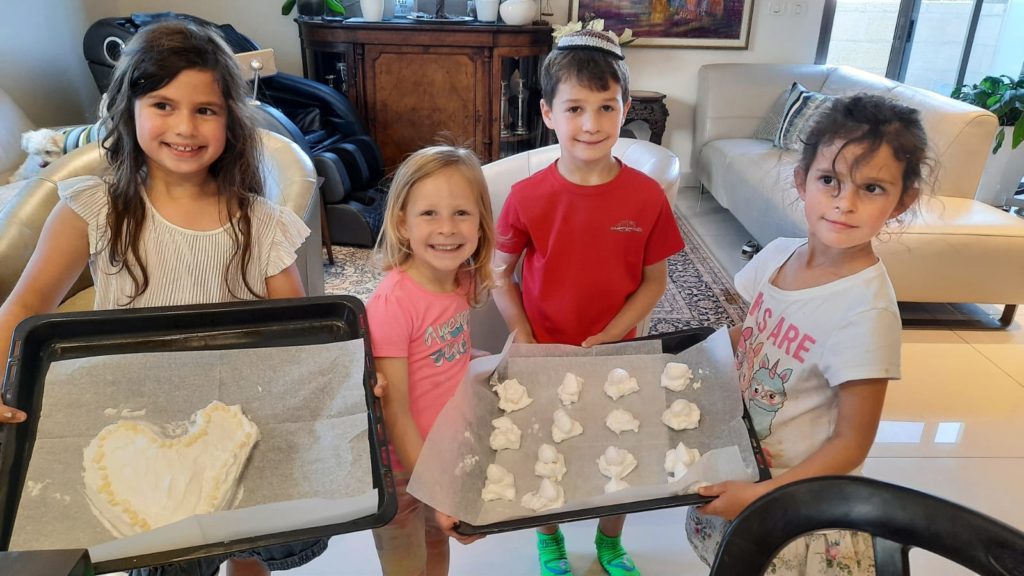
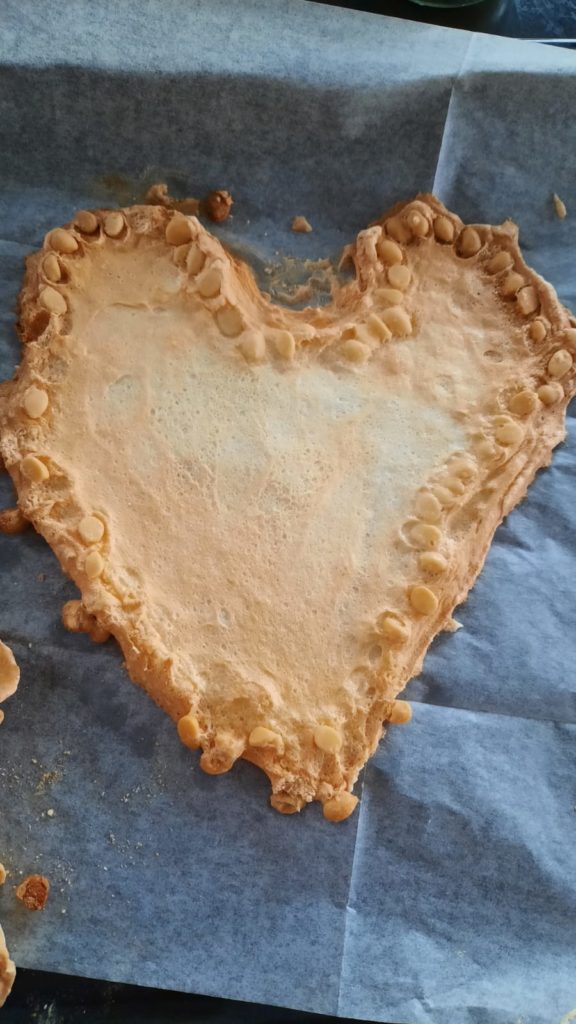
This is a song at a Koolulam concert about Love. I am sharing it because I was there!! It was an amazing concert and it made me ‘feel’ the LOVE/ AHAVA of Am Yisrael Chai. Think about the great song from The Lion King- ‘Can you feel the Love Tonight‘. So the theme of this weeks Parsha- ‘loving one another as we love ourselves.’…is so important. Wear your ‘rose colored glasses, feel uplifted, feel the love and share the love…
Shabbat Shalom from Safta Laya