Parsha Vayikra with Safta Laya
Parsha Vayikra
He (G-d) called to Moses and G-d spoke to him….
The word Vayikra is from the root word ‘ – to call ‘-Kara’.There is a small aleph at the end of the word Vayikra. What does that mean?
It’s all about who you are calling and for what purpose. In our Parsha, Hashem is speaking directly to Moshe and he is doing so lovingly and gently with affection. Moshe knows that whenever G-d speaks to him, he feels humble, and understands deeply, that he is the chosen one to receive the message directly from G-d and pass it on to the people. His humility is represented in the small aleph at the end of the word Vayikra. That small aleph represents both Moshe’s ‘profound humility’ and the lesson for all of us that only with humility can we gain knowledge. If we think we know a lot, or think we know everything, and are vain and show off what we know because we are bright and clever- this is often an obstacle to learning. We need to learn the lesson from Moshe- to be humble. Moshe was ‘the greatest of all prophets , but the humblest person who ever lived’. The Sages teach that G-d spoke to Moshe with a loud thunderous voice, and only he was able to hear G-d’s voice. Why couldn’t the people hear it if it was loud? The Sages explain that the people were not worthy of hearing it. Similarly G-d’s prophecy to Bilaam is introduced with the word Vayikar – written without the aleph at the end- indicating that G-d didn’t talk to Bilaam gently with affection, because he knew Bilaam was ‘spiritually contaminated’.
The Book of Vayikra (Leviticus) is about G-d calling to the Jewish people – a call of affection, according to Rashi, telling them to affirm their relationship with G-d and live as a Holy people. ‘Karov’ is also from the root word ‘Kara’ means ‘to come closer to’…. And Hashem wanted his people to come closer to Him”. As we all know, every relationship goes through their ups and downs, there are mistakes, and blow ups , strain and stress and then a time of ‘making up’ and coming closer to each other. The bond of the relationship weakens (sometimes is badly damaged) and then there is a time to repair it and build it up again to restore the relationship. Hashem helped us understand that all relationships could be strengthened and repaired. The book of Vayikra is about the different offerings and sacrifices that we give to Hashem to repair and heal the relationship. Yes, first we have to be accountable and admit what we did wrong and then go and apologize for our wrongdoing. The sacrifices and offerings brought to the Temple are for ‘sins’, forgiveness, peace offerings, and many more different types of offerings. (We will explore more of these in the weeks to come.) In today’s world, we don’t have the Temple, so for the last two thousand years, the Temple sacrifices have been replaced by the prayer services in our Synagogues or privately. Instead of coming to Jerusalem, Jews direct their hearts towards Jerusalem.
Did You Know
Sefer Vayikra is the first book of the Torah that children learn at school. Why? What is this book about? Our Sages consider Sefer Vayikra the ideal material to start formal Jewish Education. The Midrash asks; Why do we begin Torah Instruction of young children with ‘Torat Kohanim’ and not Bereishit?
Because young children are ‘Tehorim’ (pure) and the ‘Korbanot’(sacrifices) are tehorim. It is said “Let the pure ones come and be immersed in matters of purity”. The Kli Yakar explains this tradition in terms of the word ‘Vayikra’ with the small letter aleph. The Aleph is the first letter of the alphabet, and represents the beginning of Torah study. This special alef marks the place where a young child starts Torah learning. The Me’am Lo’ez writes that having young children study the laws of korbanot (sacrifices) is as precious and meaningful to Hashem as the actual physical performance of those korbanot. So having our children study this first, is like offering a korban ourselves. (Taken from Shira Smiles- ‘Vayikra’)
Korbanot
Parsha Vayikra begins with God speaking to Moshe in the Mishkan. God tells Moshe about the korbanot – the offerings, that were an important part of the service in the Mishkan.
We learn about various types of korbanot:
– The Olah, also known as the burnt offering, which is burnt entirely on the alter.
– The 5 types of Mincha offerings, which are sacrifices made from flour and olive oil.
– The Shelamim, the ‘peace offerings.’
– The Chata, various sacrifices brought as an atonement for someone who has sinned.
– The Asham, a sacrifice brought for specific reasons.
There are many laws and intricate rules regarding the korbanot, but one rule applied to all – each one was brought with salt.
Kemitzah
(adaped from: https://www.shabboshouse.org/mendels-messages/shaka-kemitzah-wave/)
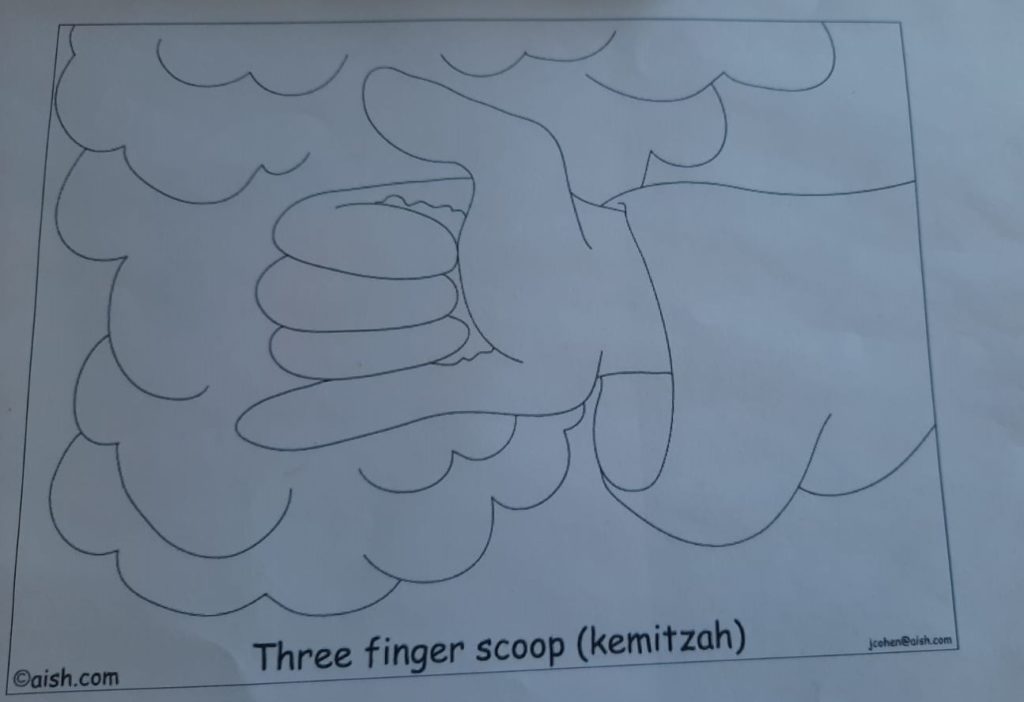
What is Kemitzah? When a person brought a flour (as in dough) offering to the Temple, the Kohain would take a fistful of flour, shake off the pinky and thumb, and the flour remaining inside the three clenched fingers was brought as an offering. The protruding pinky and thumb with three folded middle fingers is said to be the Kemitzah symbol. Some Sages say this has a mystical significance and the Kemitzah is the symbol of Jewish strength, courage, and Jewish hope. Many people have the tradition of pointing their ‘pinky ‘ finger at the Torah when it is held up in the Synagogue and saying “Zot Ha Torah”- to acknowledge the Torah’s great strength in times of challenge and adversity.
FUN FOODS:
The ‘Korban Mincha’ was made from flour, water and oil. It could be raw, fried or baked into a cracker form. It could not be leavened- it was not allowed to rise.
Next week we will eat the ultimate unleavened food- which is Matzo.
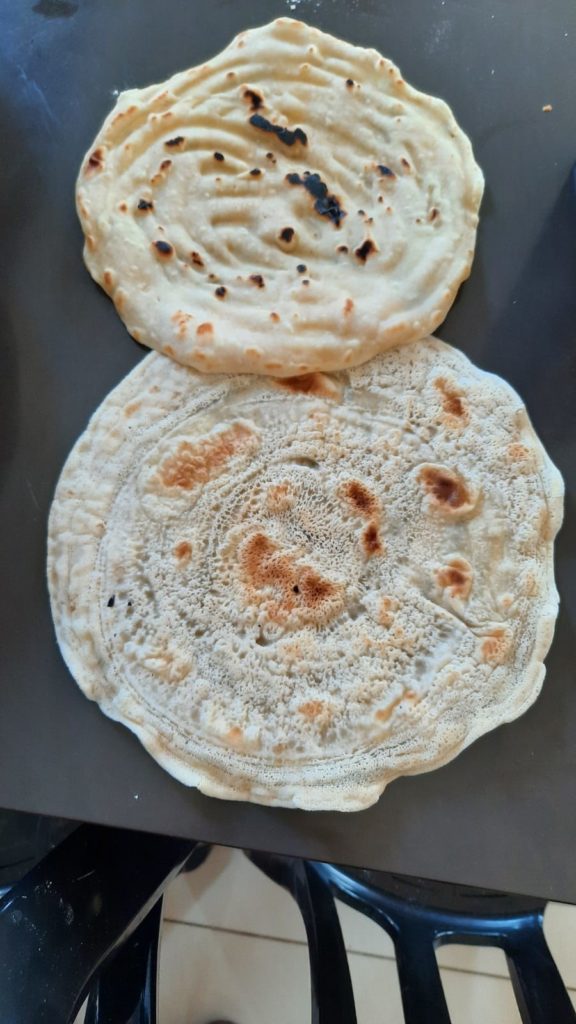
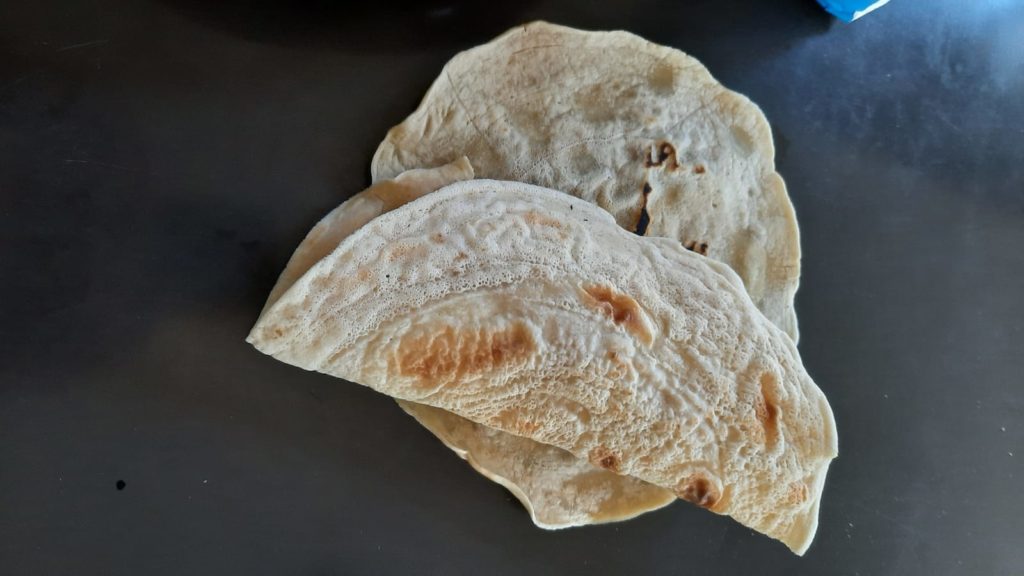
It is interesting to note that both the words ‘challah’ and ‘matzah’ are in this Parsha. Both these breads are central and so important in Jewish life. Before throwing away all the flour before Pesach- try making this combination of flour, oil, and water-and making a flat unleavened bread/ laffa style in a large nonstick pan. It’s so simple, actually tastes good, and you can fill it with stir fry veggies, chicken strips or eat it as is!

FUN ACTIVITIES:
1) The Kemitzah symbol-
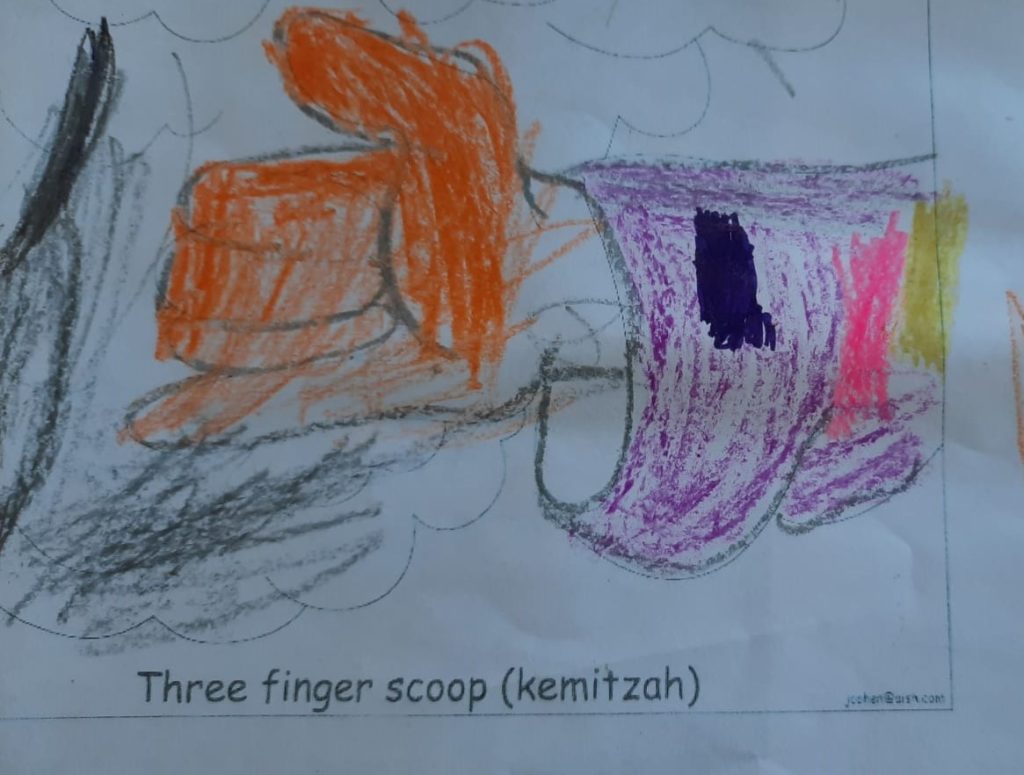
a) Color in the picture from the blog ( can print it out and enlarge it)
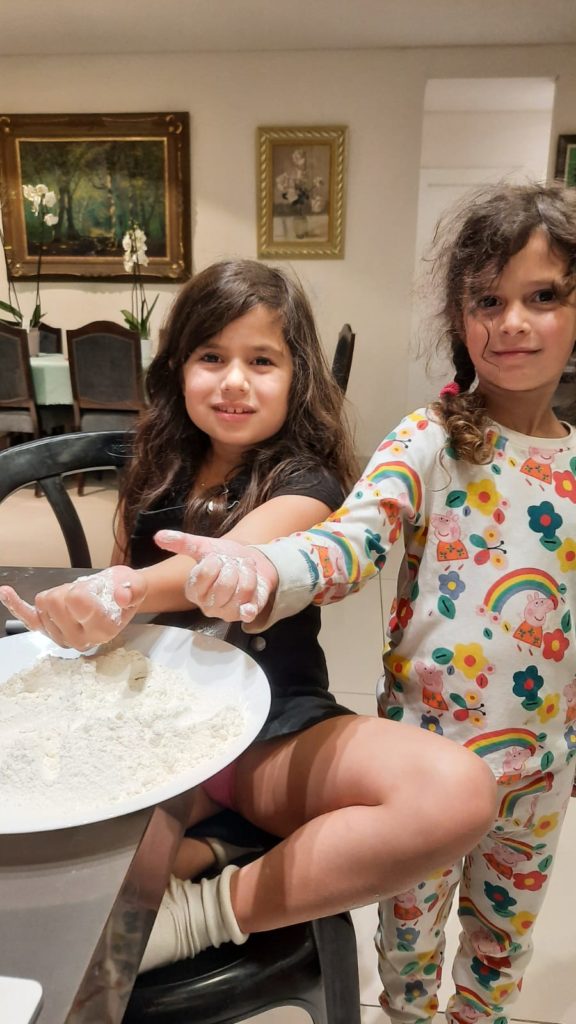
b) Pour some flour into a bowl, and try to scoop it up with the 3 middle fingers. Try and see how much flour you still have in your fingers. (Do this activity before all the chometz in the house is removed…) It’s a bit messy, however it gives a really good idea of what the Kohainim had to do in the Temple for the Korbanot.


2) Play ‘broken telephone’ game with family members. Preferably sit in a circle, or a line. Whisper a word or sentence into the ear of the person next to you, who passes the message to the next person- until the final person says the word or message out loud. Will it be the same word or sentence when it began? -Learn about the power of listening and hearing. Vayikra!
Shabbat Shalom,
from Safta Laya
P.S check out this weeks Parsha YouTube video: