Parsha Tetzaveh
Parsha Tetzaveh usually comes before Purim- Is there a connection?
On Purim it is a custom to dress up in masquerade costumes. We discuss in detail the Kohanim dressing up to perform the holy services in the Mishkan, (the Temple) with honor and respect. Purim time comes and the ‘dressing up’ is fun and not serious and it reminds us that the whole world is a ‘show’.
We wear things we are not, we hide our true selves, and we parade with our fantasy costumes. The whole world is like a mask that hides the existence of Hashem, G-d. The Hebrew word for ‘World’ is ‘Olam’, which has the same root as ‘Ne’elam’ which means ‘vanished’ or ‘hidden’.
This Parsha talks mostly about the the Kohanim, (Priests) who are primary caretakers of the Mishkan (Tabernacle). Aaron the High Priest, and his descendants, the Kohanim, are mentioned in this Parsha. From birth, the Kohanim were different from the other tribes. They were trained for holiness. There were laws and practices that separated them from the other tribes. They didn’t own land, couldn’t work in the trading business, and were allowed to eat special foods. The Talmud states that the Kohanim were Hashem’s spiritual messengers to the Jewish people, and the Jewish people’s spiritual messengers to G-d (Yoma 19). This Parsha ‘s main focus is on the special clothes that the Kohanim had to wear while working in the Mishkan. The Kohen had strict rules and obligations about their clothing. In fact, a Kohen who performed a service without any piece of his clothes was subject to the death penalty.
The more elevated the Kohen, the greater the emphasis on his clothes. Each garment possessed special atoning qualities that influenced the behavior of the wearer. For example- the tiny ringing bells at the bottom of the coat reminded the Kohen not to speak Loshen Hora (gossip). The Kohanim were not allowed to sleep in their special clothes, or even walk around with them. They were exclusively for the service of the Tabernacle. The Torah explains that the clothes had to be “holy garments for honor and beauty”, “glory and splendor”(Exodus 28;2).
He clothes always had to appear clean and new. The garments were similar to the garb of Royalty (Ramban) The clothes of the Kohanim continually reminded them that of their holy occupation, and their holy work for the Jewish nation, and wearing their garments kept them holy and humble.
The nation had to recognize that Aaron and his sons were on a higher spiritual level and that is why only they could perform the service. The clothing of the Kohanim set them apart from the other people, and elevated the way they performed their tasks. . This was to teach the nation that one should dress respectfully, and with dignity when performing any commandments or mitzvot, or good deeds, or praying to G-d.
We can learn so much from this today too – we should be aware of dressing appropriately and respectfully when praying (davening), and that they way a person approaches a task, will influence how that person will perform on that task…Lots to think about.
DID YOU KNOW??
- This is the ONLY Parsha (from the beginning of Exodus until the end of the Torah) that Moshe’s name is NOT mentioned.
- There are 50 verses (half of the Parsha) that describe the Kohanim’s garments that had to be worn.
- The oil for lighting the Menorah had to be absolutely pure- without any other mixtures or even olive sediment. (Aaron and the Kohanim had to also be ‘pure’ and separate from the rest of the nation.)
- The Kohen Gadol wore 8 Vestments to perform the services. (Yom Kippur- he only wore 4 vestments made from White linen.)
The High Priest’s Breastplate- The Choshen
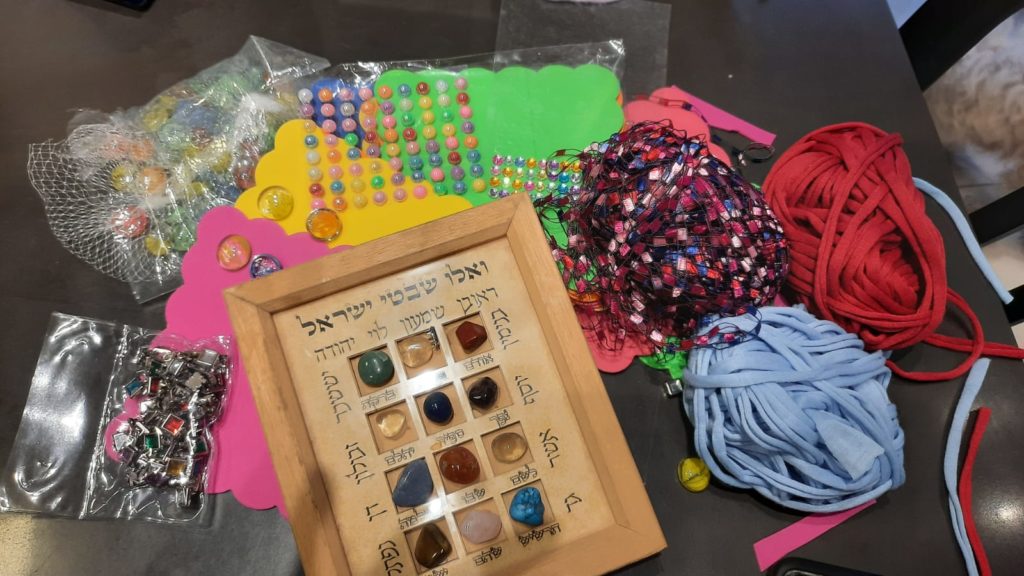
This was one of the 8 priestly Garments worn by the High Priest (Kohen Gadol) when serving in the Holy Temple. It featured 12 precious stones, corresponding to the 12 Tribes of Israel, set in gold. The gems were arranged in 4 rows with 3 colors in each row. The Choshen also had the names of Avraham, Yitzchak, and Yaacov as well as the Shitei Yeshuran (tribes of Yeshuren) which contained all the 22 letters of the Hebrew alphabet.
There was also a piece of parchment, known as the Urim VeTumim which was inserted in the folds of the breastplate, and one of Hashem’s sacred names was written on it.
The Choshen was worn on the Kohen Gadol’s chest. One of the purposes of the Choshen was to get Divine Direction when the Jewish community were in doubt. It lit up when a question was asked, and it gave clarity from Hashem. It was also called the Choshen Mishpat.
There are many suggestions as to the exact identity of the 12 stones, and which tribe had what stone. When the Jews travelled through the desert from Egypt to the Promised land, each tribe had a flag, which was the same color as their stone and each stone reflected the unique character of the tribe.
The stones of the Breastplate empowered the Jews to refine themselves and shine. Today, we don’t have the Choshen and so our Tefillah (our prayers) said with Kavanah (sincere intention)- is the dazzling gem that we give to Hashem.
This is one opinion of the arrangement of the stones/ gems:
Carbuncal- Levi; Pearl- Zevulun; Crystal- Gad ; Jasper- Benyamin;
Prase- Shimon; Saphire- Issachar; Turquoise- Naphtali; Onyx- Yoseph;
Ruby- Reuven; Emerald- Yehudah; Leshem- Dan; Chrystolite- Asher.
FUN CRAFTS:
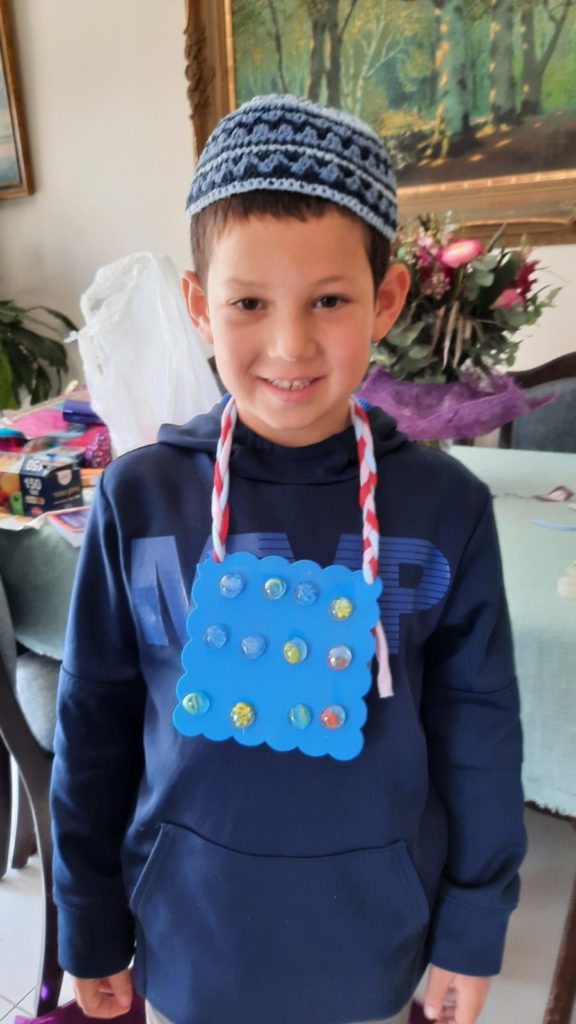
Make a Choshen
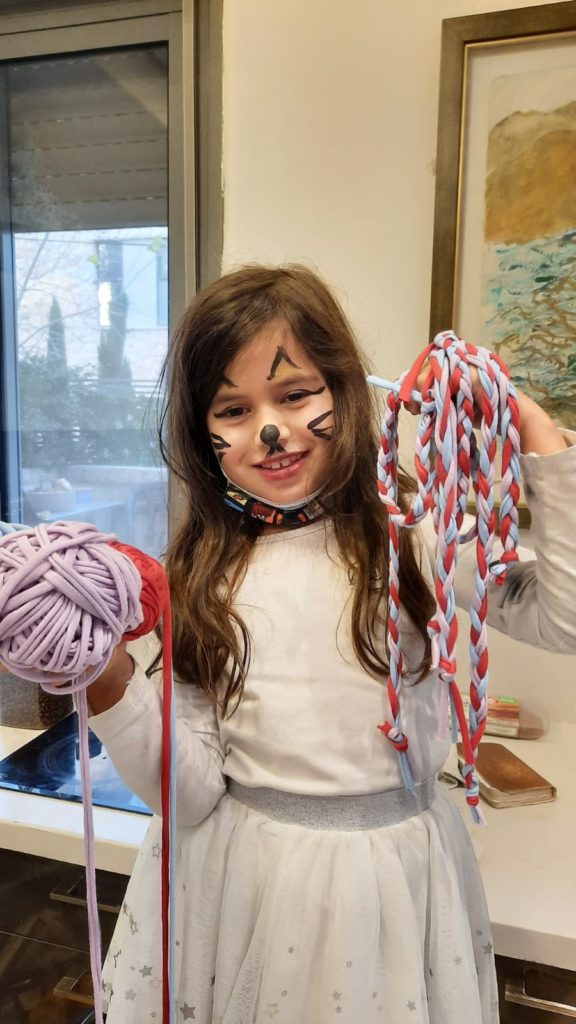
With stones, stickers, marbles- with a colored strong backing. (cardboard, wood, felt, plastic- see pics)
Make a twisted wool braid to thread through it and hand it around your neck .
Wear it with ‘splendor and glory’ over Shabbat!
FUN FOODS:
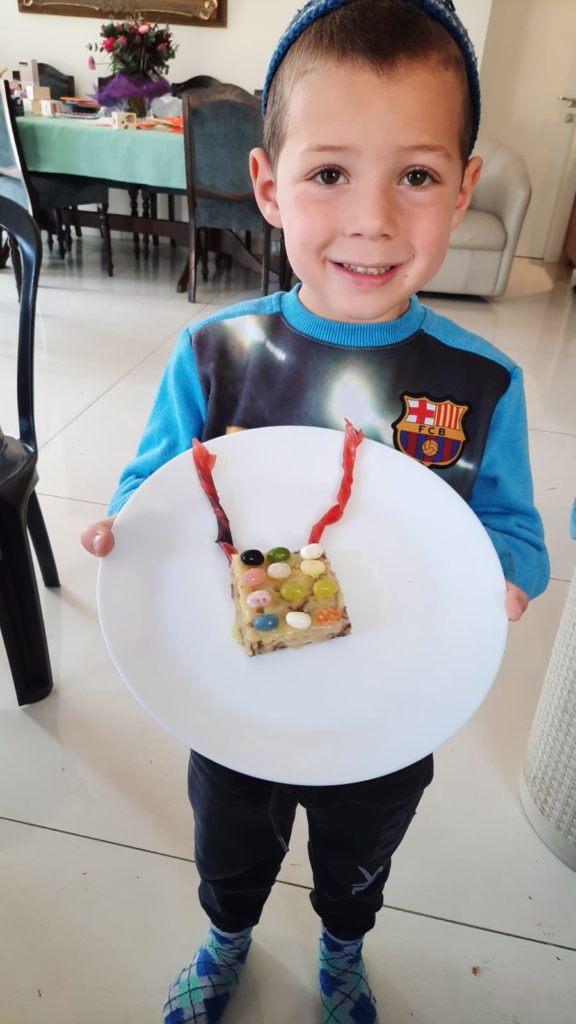
Make a favorite cake!
Ice it with a favorite color. The shape should be rectangle/ square, or small rectangle cakes which is sometimes preferable for each family member.
Decorate with ‘edible gems’- like Jelly babies, Mike and Ikes, smarties- remembering 3 rows of 4, or 4 rows of 3.

It great to serve Olives, and olive oil with food this Shabbat to remind us of the pure olive oil that the Jewish nation had to make for the lighting of the Menorah.
Wishing you a Happy Purim and Shabbat Shalom,
Safta Laya